
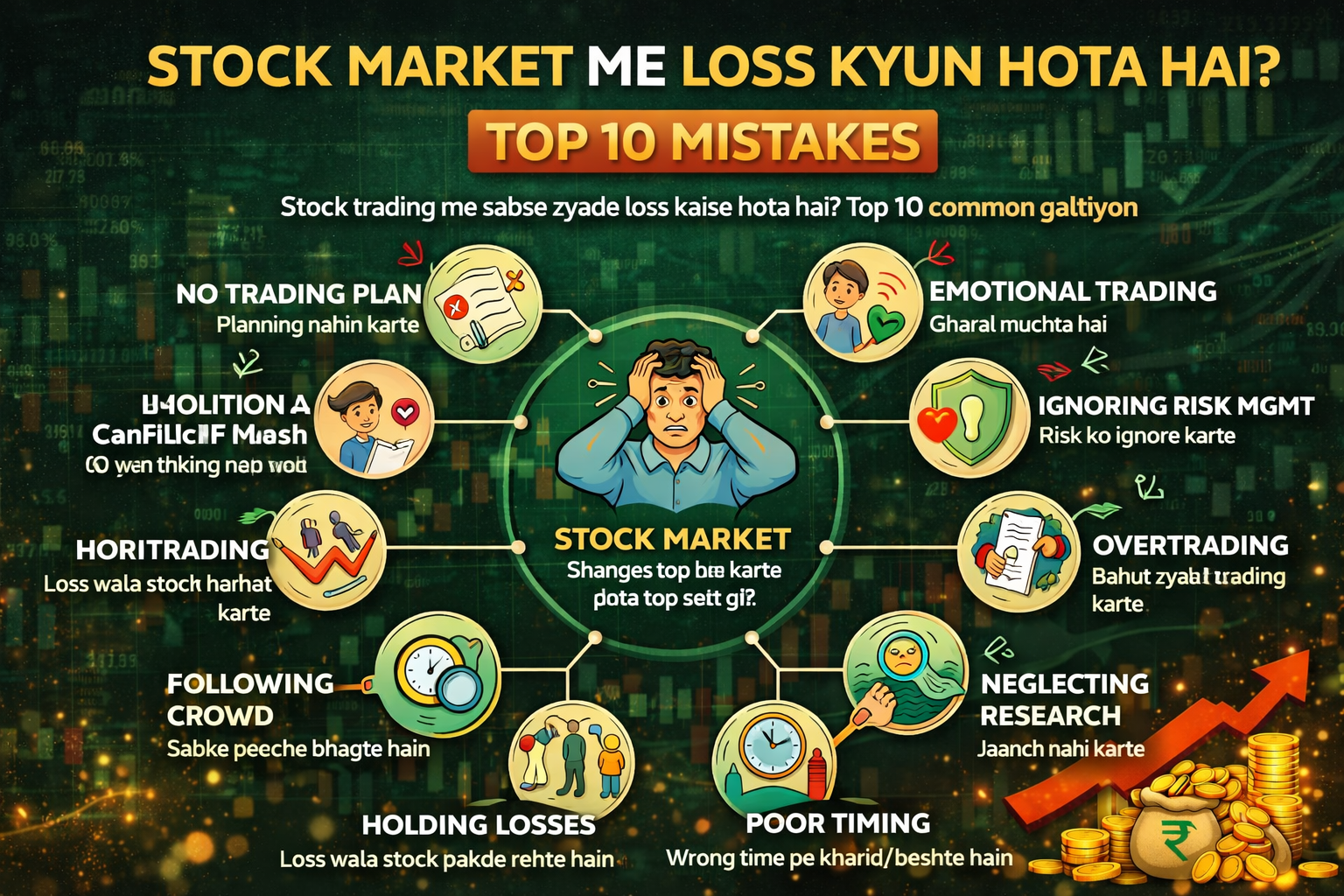
Stock Market Me Loss Kyun Hota Hai? Top 10 Trading Mistakes
Stock market trading can be a lucrative venture, but it is fraught with risks and challenges that can lead to significant financial losses. Many aspiring traders find themselves asking, “Stock market me loss kyun hota hai?” This guide aims to shed light on the top 10 trading mistakes that often contribute to these losses. By understanding common pitfalls and adopting effective strategies, traders can improve decision-making and increase their chances of success.
Stock Market Overview: Understanding the Basics
What is the Stock Market?
The stock market is a marketplace where investors buy and sell shares of publicly traded companies. When you purchase a stock, you own a small portion of that company, and your returns depend on its performance in the market.
Key Terminologies in Trading
- Bull Market: When stock prices are rising.
- Bear Market: When stock prices are falling.
- Dividend: A portion of company profits paid to shareholders.
- Portfolio: A collection of all your investments.
Types of Financial Instruments
- Stocks: Ownership shares in a company.
- Bonds: Fixed-income instruments issued by companies or governments.
- Mutual Funds: Professionally managed investment pools.
- ETFs: Exchange-traded funds offering diversification.
Common Reasons for Losses in Stock Trading
Market Volatility and Its Impact
Market volatility refers to rapid price fluctuations. While it can create profit opportunities, it can also cause sudden losses if trades are not well planned.
External Economic Factors
Factors like inflation, interest rates, global news, and political events significantly impact stock prices and market sentiment.
Insufficient Knowledge and Experience
Entering the stock market without proper knowledge often leads to losses. Education and practice are essential before risking real capital.
Top 10 Trading Mistakes to Avoid
1. Lack of a Trading Plan
Trading without a plan often results in impulsive decisions and unnecessary losses.
2. Emotional Trading Decisions
Fear and greed can cloud judgment and lead to poor trading choices.
3. Ignoring Risk Management
Proper risk management protects capital and ensures long-term survival in the market.
4. Overtrading
Excessive trading increases transaction costs and emotional stress.
5. Failure to Adapt to Market Changes
Markets evolve constantly; rigid strategies can lead to losses.
6. Poor Timing of Buy and Sell Decisions
Incorrect entry and exit timing can turn profitable trades into losing ones.
7. Neglecting Research and Analysis
Successful trading requires both technical and fundamental analysis.
8. Following the Crowd
Herd mentality often results in buying at tops and selling at bottoms.
9. Holding Onto Losing Stocks
Hope-based investing can drain capital; timely exits are crucial.
10. Not Setting Stop Losses
Stop losses limit downside risk and protect traders from major losses.
Psychological Factors Affecting Trading Decisions
The Role of Fear and Greed
Emotional control is essential for consistent trading performance.
Cognitive Biases in Trading
Biases like overconfidence and confirmation bias often distort decision-making.
Managing Stress and Emotions
Taking breaks and maintaining discipline helps traders stay focused and rational.
Strategies for Minimizing Losses
Setting Realistic Goals
Practical targets keep expectations grounded and trading disciplined.
Diversification of Portfolio
Diversifying investments reduces risk and balances returns.
Utilizing Technical and Fundamental Analysis
Combining both analyses leads to more informed trading decisions.
Frequently Asked Questions
What are the most common mistakes new traders make?
Lack of planning, emotional trading, and ignoring risk management.
How can I minimize losses in trading?
Use stop losses, diversify investments, and follow a trading plan.
Is emotional trading dangerous?
Yes, it often leads to impulsive and loss-making decisions.
Why is research important in trading?
Research helps traders make data-driven and informed decisions.